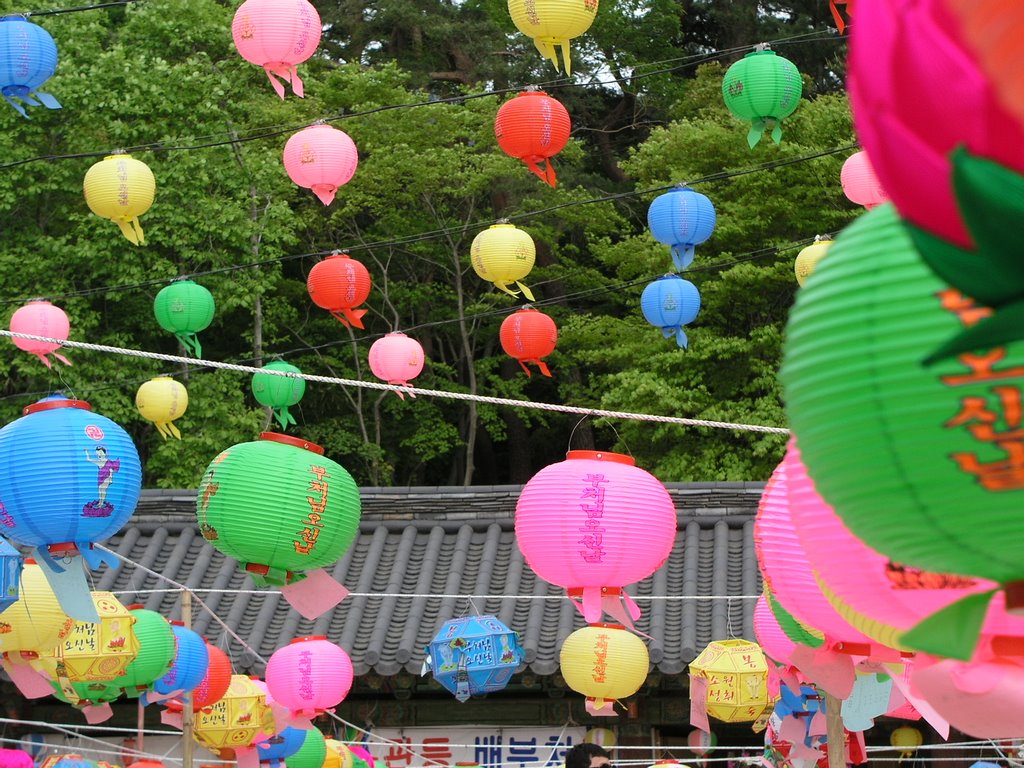
Some pictures from around Incheon
A groovy building near Chinatown (yes, there is actually a Chinatown in Korea, but it pales in comparison to even Chicago's). It's covered with bottle caps. 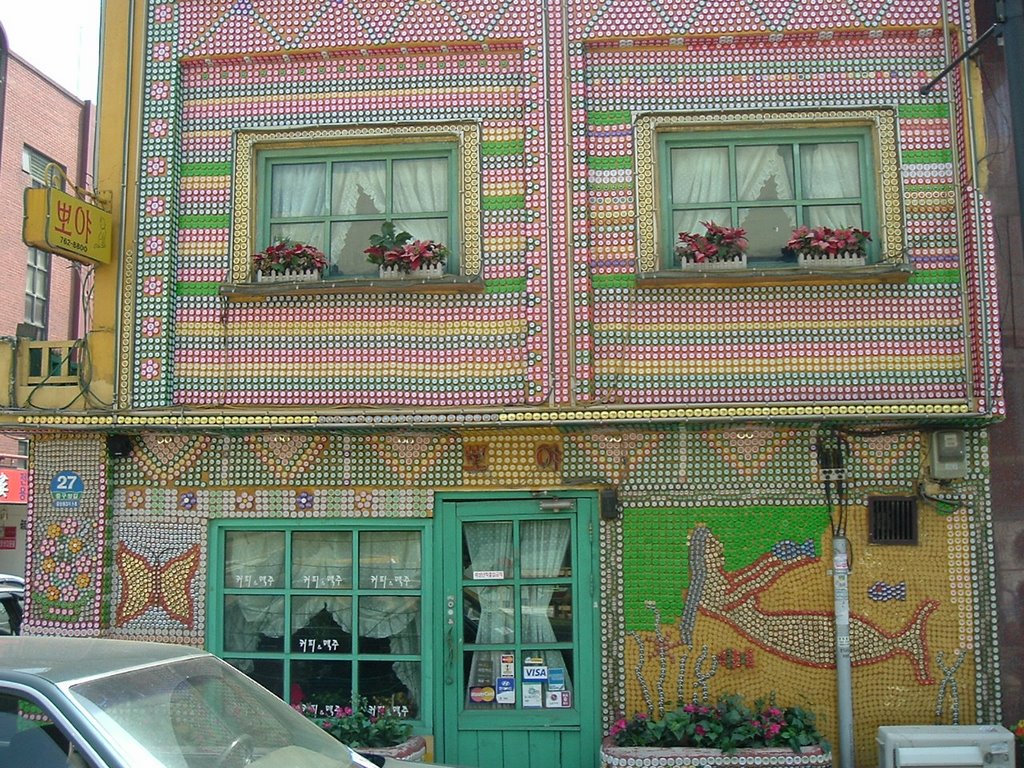
The view from Munhak Mountain, which is not too far from my apartment. It makes for a nice hike when the trails aren't too muddy. The blocks of identical apartment buildings are fairly typical. They are usually surrounding by lower-lying business district. 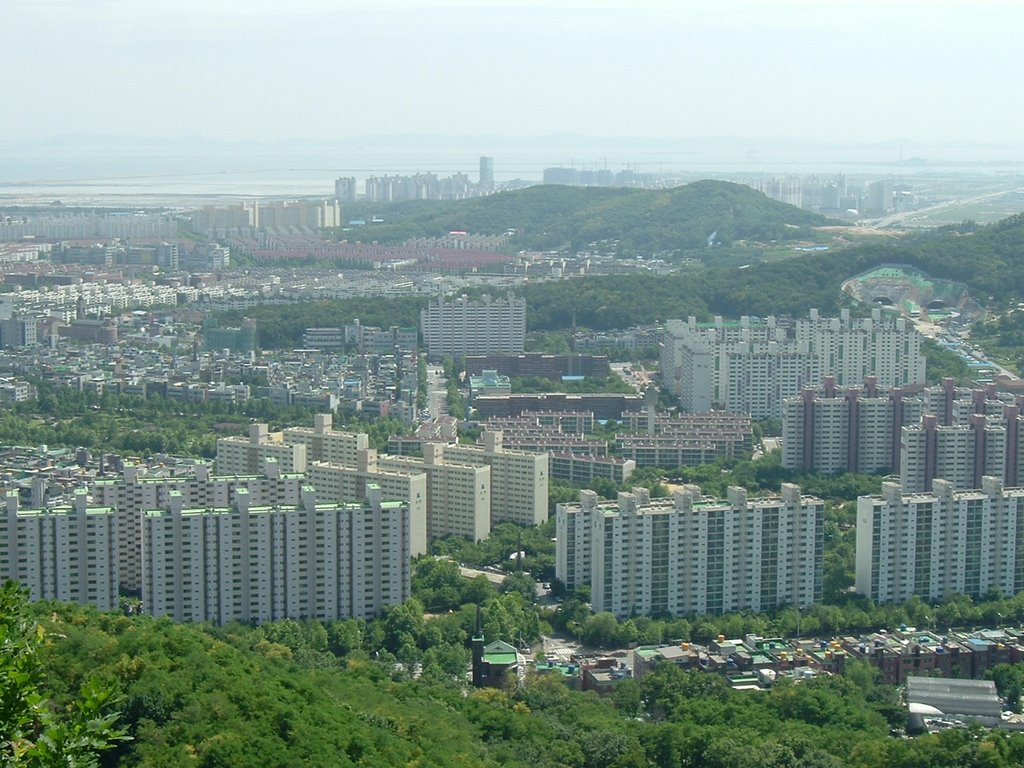
Another view from the mountain showing the soccer and baseball stadiums. Inside the soccer stadium are a children's museum, gym, public bath, golf driving range, singing rooms (karaoka), and some other stuff. The area around the stadium includes an artificial stream, fountain, climbing wall, lots of benches, and a playground. It's about a mile down the street from me, and is where I catch the subway. 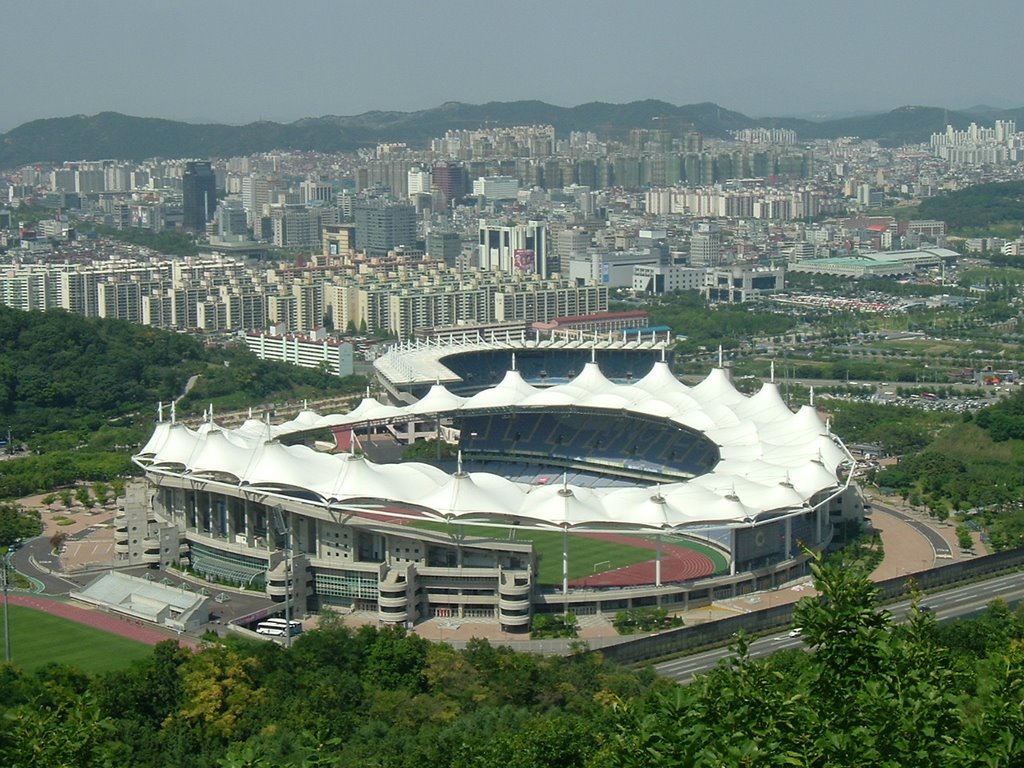
Not to far from my house is this ship restaurant. Since most Korean streets don't have names, you navigate by landmarks. You'd think that this would be a good landmark to direct cab drivers towards (the cabbies usually know the bigger apartment complexes, but I live in a small building with only a dozen or so units). 
But no, there is another ship restaurant on the other side of my apartment, and further down the street. 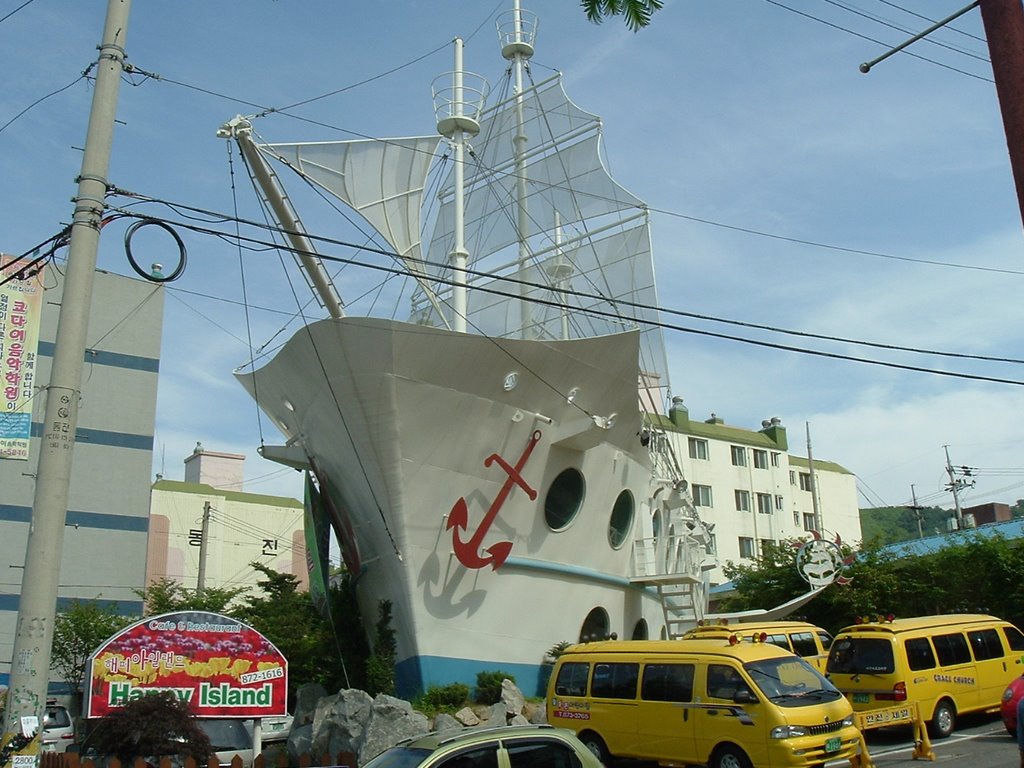
Wednesday, July 26, 2006
Incheon


Tuesday, June 13, 2006
Osaka
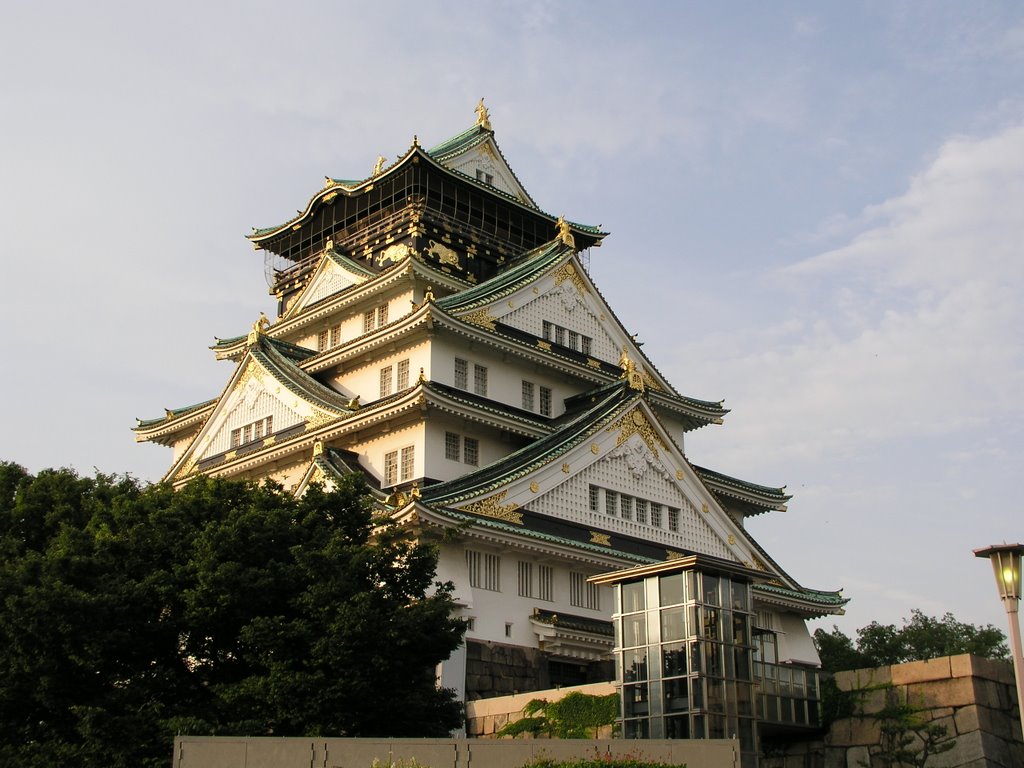
My second trip to Japan this year, and sixth overall (although four of them have been for three days or less). I did get to revisit Osaka Castle, but due to timing I wasn't able to make it to Kyoto. I was also there for the Japan-Australia World Cup game, which Australia pulled out in the last few minutes. There were some pretty fervent rooters, but I didn't see the crowds like they had in Korea.
Here are some pics of the castle. 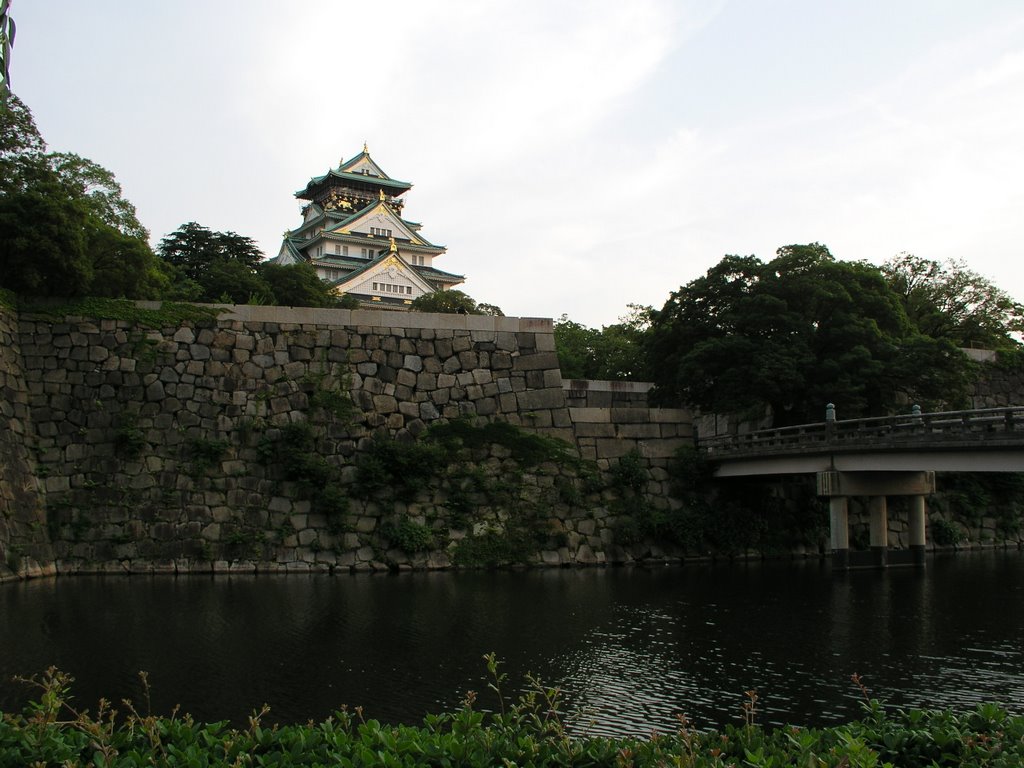

Saturday, June 3, 2006
Goodbye Pohang, Hello Incheon
Well, it's my last full weekend in Pohang. I'm moving again. This time up to Incheon (which is a east of Seoul, and home to the international airport). Hopefully I'll be able to finish up a full year there. I visited the school a couple of weeks ago, and it looks pretty good. I'll be teaching kindergartners in the morning, and middle schoolers in the afternoon. The curriculum includes teaching math, science, and social studies in addition to English. So at least there will be some variety to my routine. My apartment is a nice two-bedroom place, with an oven (which are rare in Korea). It's a bit far from the school, but just a 20 minute walk to the subway and stadium complex, where Incheon's baseball and soccer team play. It does look like riding a bike would be doable. The sidewalks had bike lanes and not too many crossing streets.
In the meantime, I took another jaunt around Pohang. Headed down to the beach and towards downtown. For some reason, the Koreans don't have an affinity to the water. Along the river, they have a nice park area with bike and walking paths, exercise equipment, volleyball courts, soccer fields, and even a rollerblading track. But this only lasts for a couple of kilometers and POSCO faces you from across the river, belching out smoke and blocking the view. 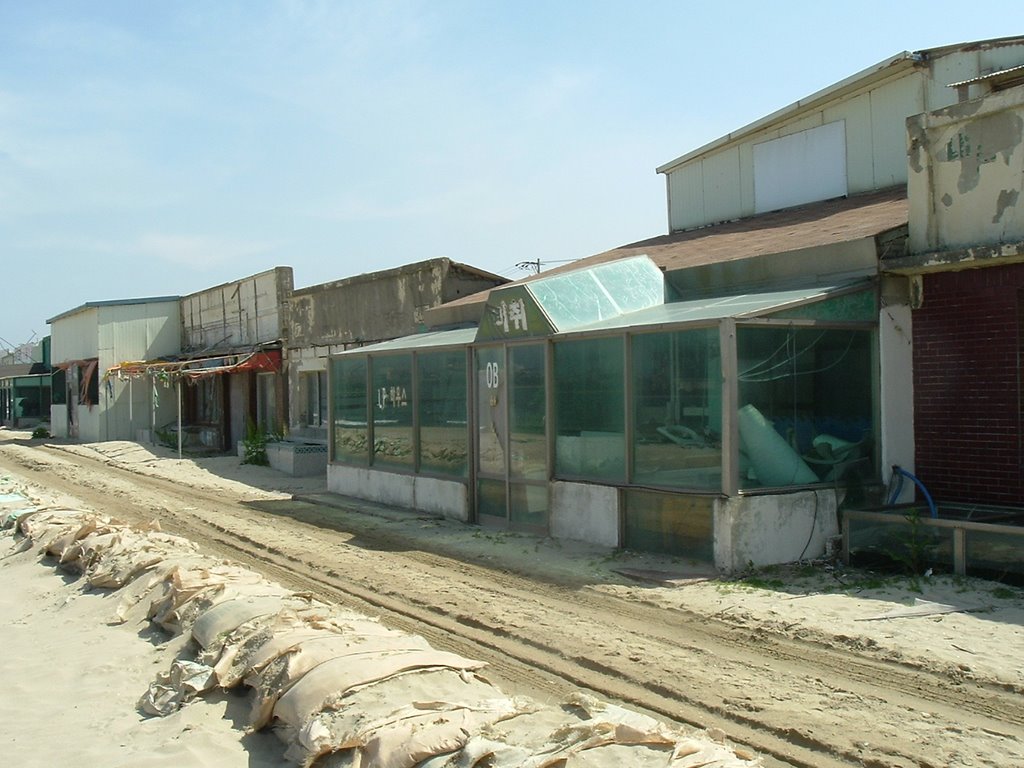 Once you hit the mouth of the river, there is a beach. The beach is not very stellar, lots of crushed oyster shells, and seaweed infested waters. But it's still the beach. But along the back of the beach, there are all these dilapidated buildings. Many look like they were at one time seafood restaurants. A few appear to have contained holding tanks for the day's catch. But most are closed and out of business. As valuable as land is here, you'd think someone would actually put these places to use. But you'd think wrong.
 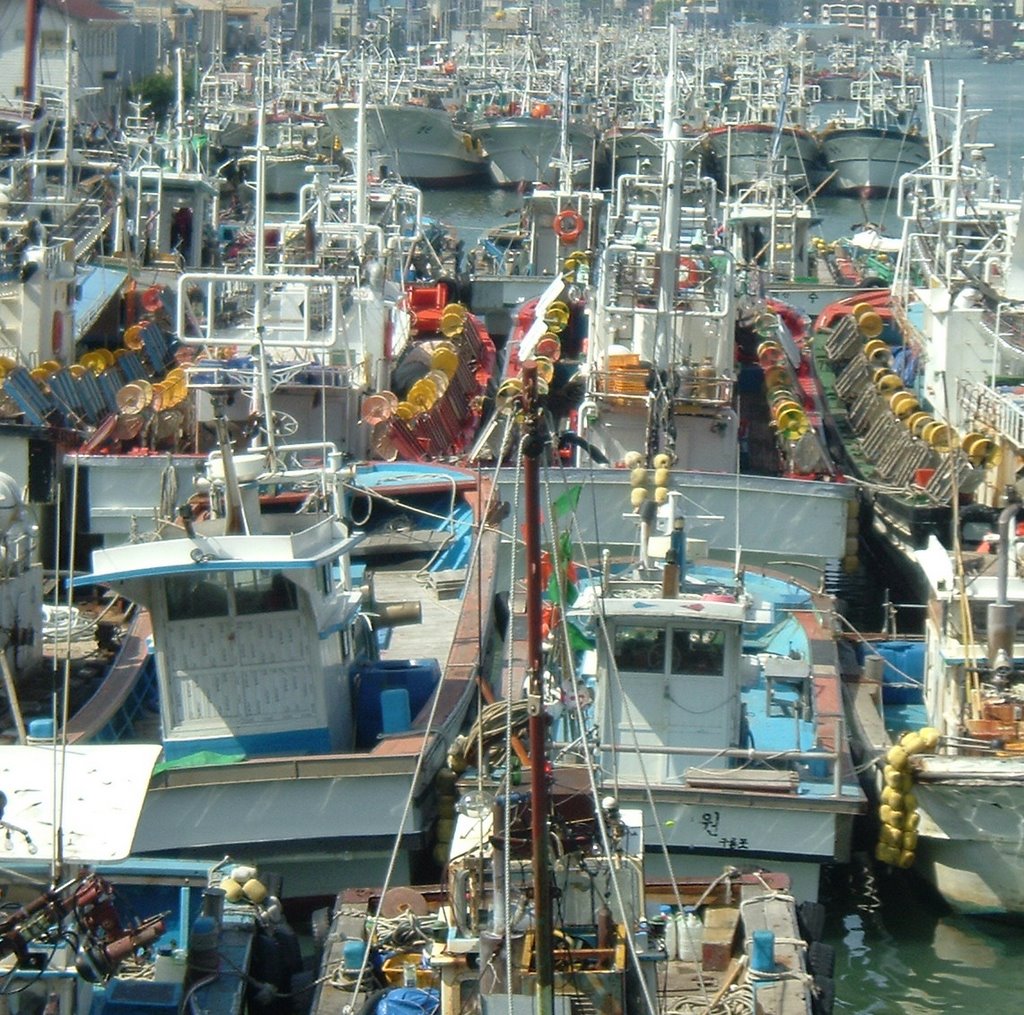 Going further along, there are fields, where people are growing crops. Again, I wouldn't think that it's the most effective use of ocean front property. But again, I don't understand the Koreans. Past the fields, there is more industry - dry docks, fuel tanks, and a couple of piers for ferry boats and the Coast Guard. Beyond this are the fishing boat docks. Rows and rows of fishing boats. That's as far as I made it, but that seems to be the gist of Pohang's coast. So pretty much no seaside parks (aside from a few beaches), no sail boats, no ocean front views to desire. They could really learn a thing or two from Chicago. Oh well, I'm leaving next week anyways. Maybe Incheon will show more appreciation for the water.
If you look closely, you'll notice light bulbs hanging from most all of the boats. They catch squid at night, and the lights are used to draw them to the surface. 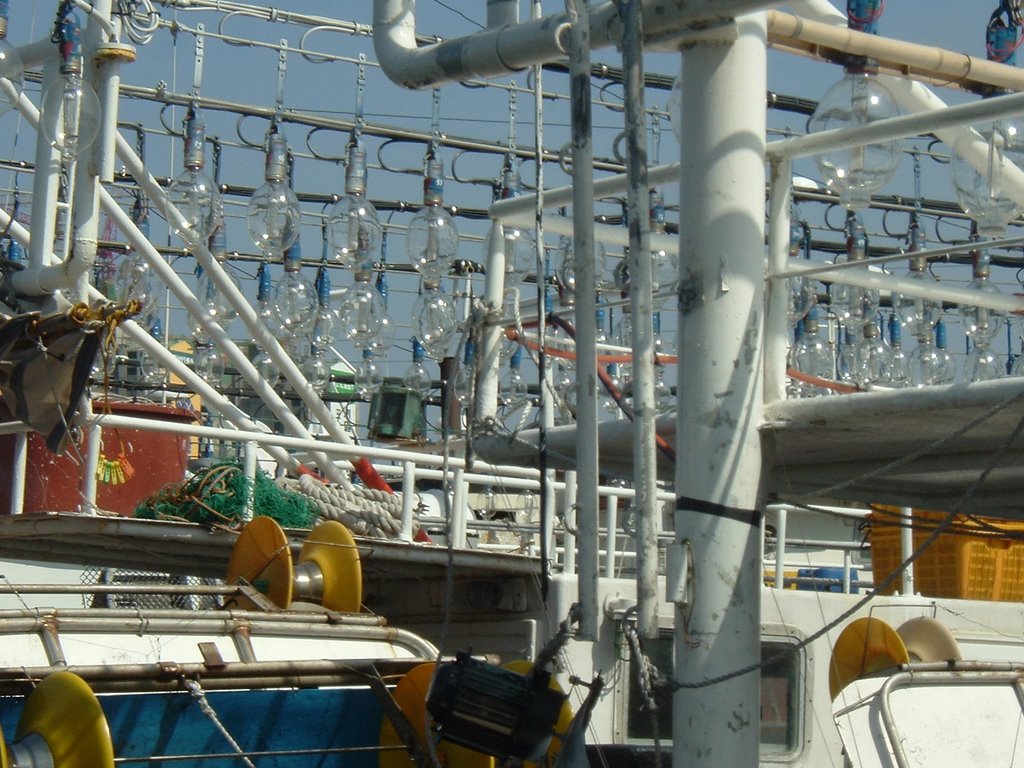
Tuesday, May 16, 2006
Pohang Steelers
POSCO, the second, or maybe it's the third, largest steel producer in the world is located here. It's hard to miss, as it consumes a large swath of land and bellows smoke and burning flames at night. They also own the appropriately named Steelers, Pohang's soccer team, who play in the K-League, Korea's major soccer league. I finally managed to make it to a game a couple of weeks ago, and the atmosphere was electric. Okay, not quite electric. A shade more electric then the atmosphere at a soccer game in Uzbekistan - and without the overbearing eyes of a massive state police force looking on - but rather pale in comparison to South American action. So rather then spending all of your money to come and experience the spectacle yourself, I present the full grandeur of it here.
The opposing Daegu fans. Corralled into one small corner of the stadium. 
The vocal Pohang superfans, on the other side. 
And the game in action. 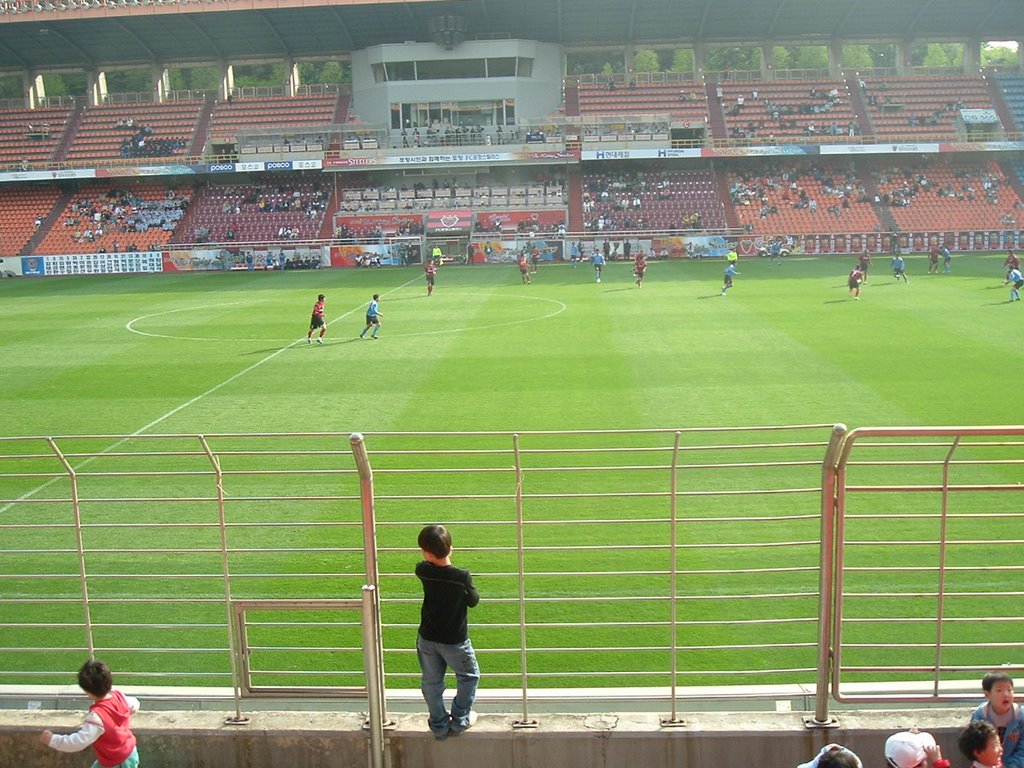
Final score - Pohang 0, Daegu 0, Att: 2,088
Sunday, May 7, 2006
Buddha's Birthday
A day of decent weather and a national holiday allowed me to escape to Gyeongju, the ancient capital of the Silla dynasty. Kind of like the Kyoto of Korea, but not quite as nice. There are a lot of sites in and around town, and I managed to make it to a couple of them. Fortunately, it's pretty close to Pohang, so I'll be able to return relativelt easily. Sadly though, I did not receive any presents on Buddha's Birthday (Number 2550, for those keeping track). Neither did I see any fat men dressed up in costumes, nor dead molting trees. Although they hung up a lot of paper lanterns.
First up are the burial mounds. They're about 1500 years old, and contain the tombs of the ancient leaders. This double mound holds a king and queen. 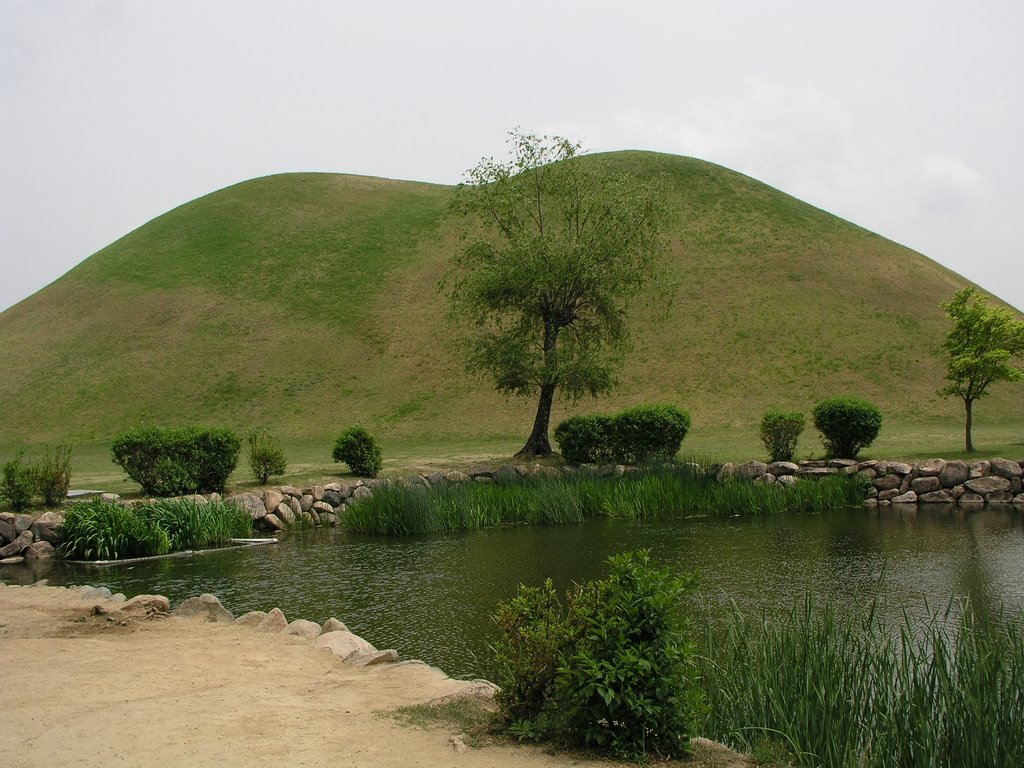
Next is Anapji Pond, which was the site of a palace back in the 7th century. These buildings are of course reconstructions. The original structure was much more expansive. 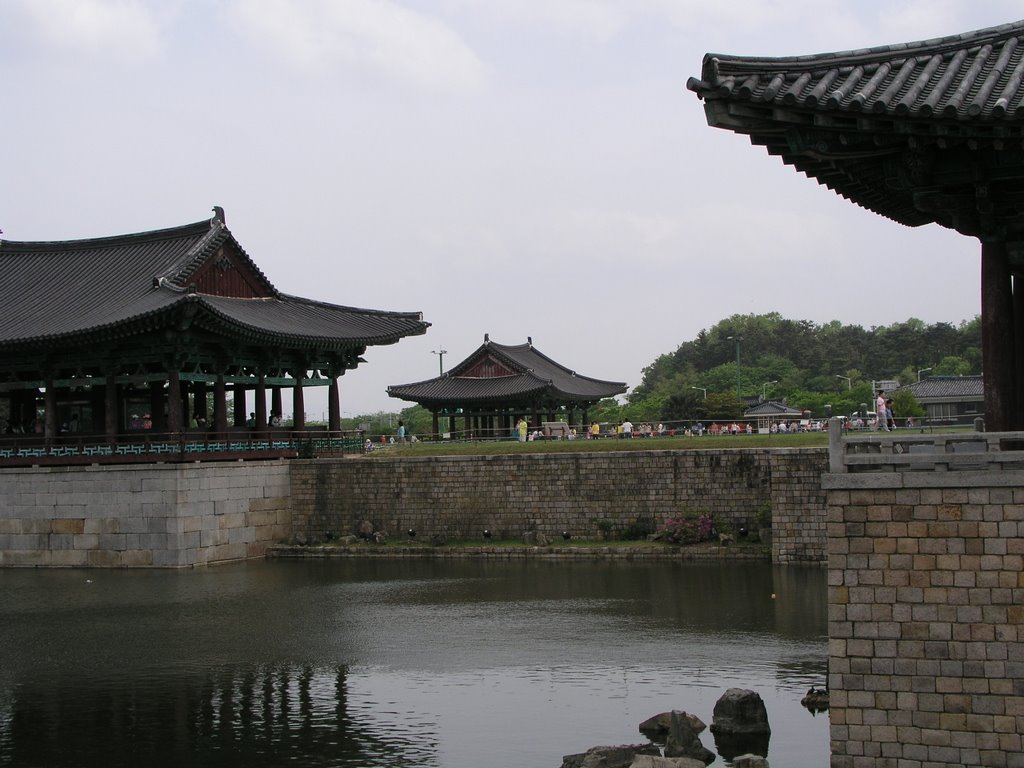
A crowd gathers at Bulguksa Temple to watch Korean women, dressed in traditional Korean clothes, sing American pop songs. 
Paper lanterns fill the air.