The Taiwan $50 (around US$1.50) coin:
From head on, a normal looking coin. 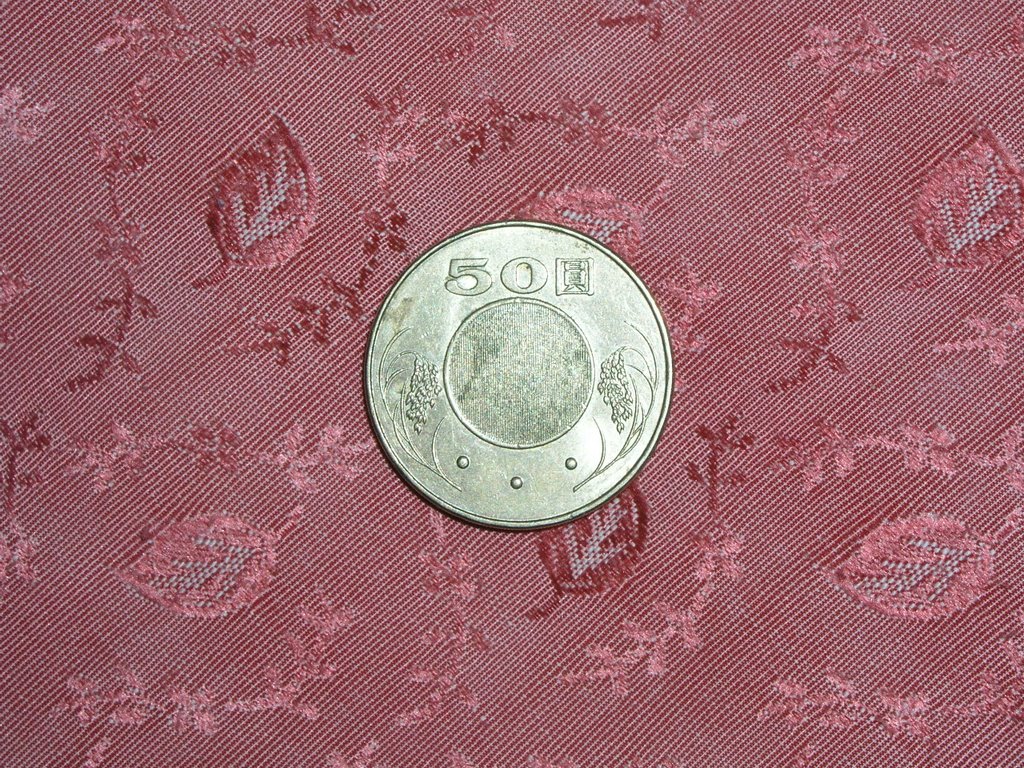
From one angle, it says 50 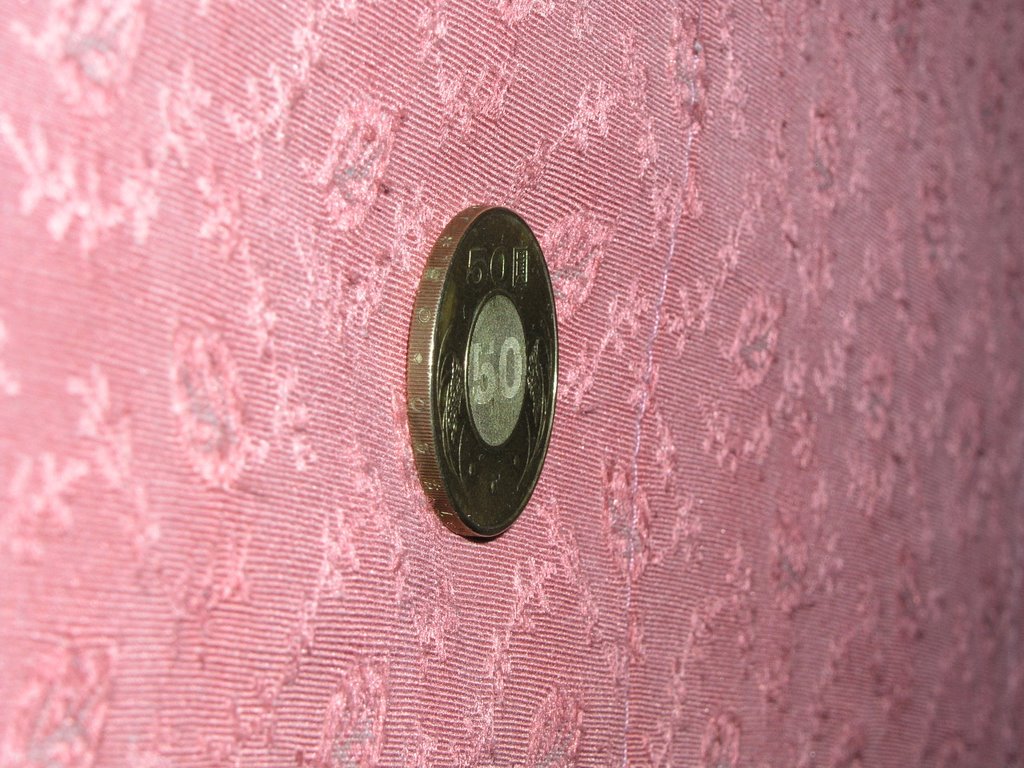
From another angle, it says 50 in Chinese characters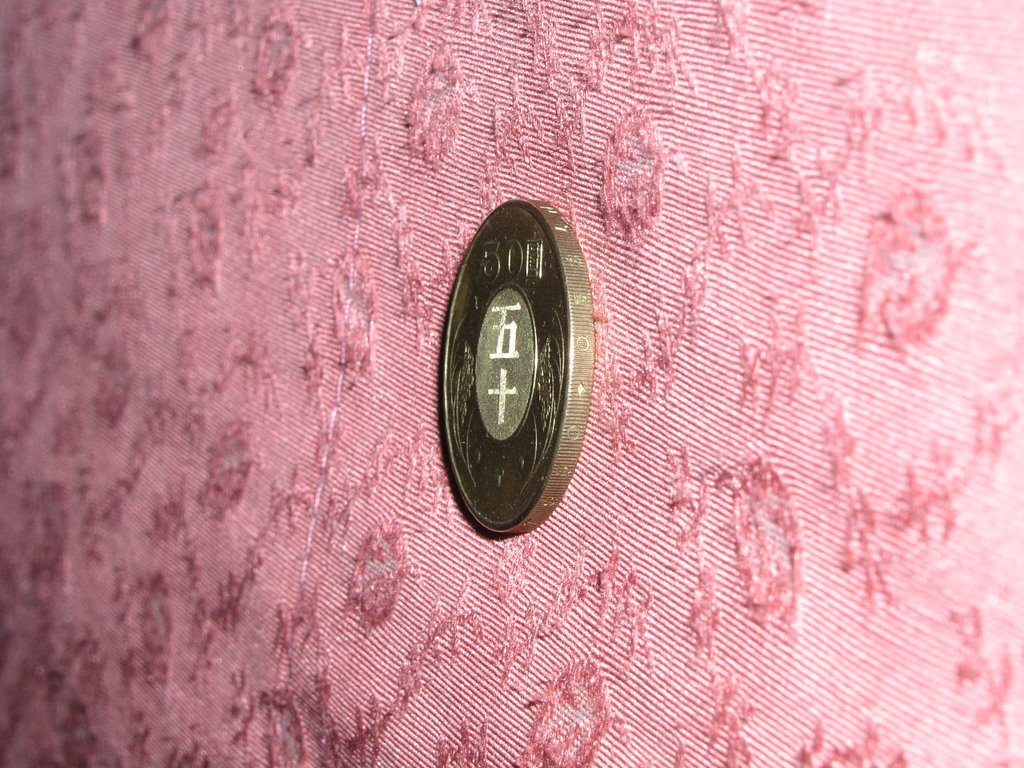
The bills are pretty impressive too (especially the $1000) but I didn't want to take any pictures and violate counterfeiting laws.
Showing posts with label Taiwan. Show all posts
Showing posts with label Taiwan. Show all posts
Saturday, August 5, 2006
A Cool Coin


Wednesday, August 2, 2006
Taipei
The final stop on my trip was Taipei. I reversed my trip from Lugang to Chunghua, which was a little confusing due to the lack of any noticeable bus station in Lugang. After finding my disembarkment point, I waited for a bus and fortunately it looped back around to Chunghua. From there, it was back onto the train for another couple of hours.  Taipei has a few interesting sights, but not quite the range of attractions that a city like Beijing has. There are the standard array of temples. The National Palace Museum houses a lot of Chinese art, which includes plates, bowls, vases, some jade carvings, bronze casts, and the occasional scroll. The best thing on display was a half room exhibit of ancient texts. The Chinese actually invented movable type in the 11th century, over 400 years before Gutenberg, who is given western credit for the invention.
 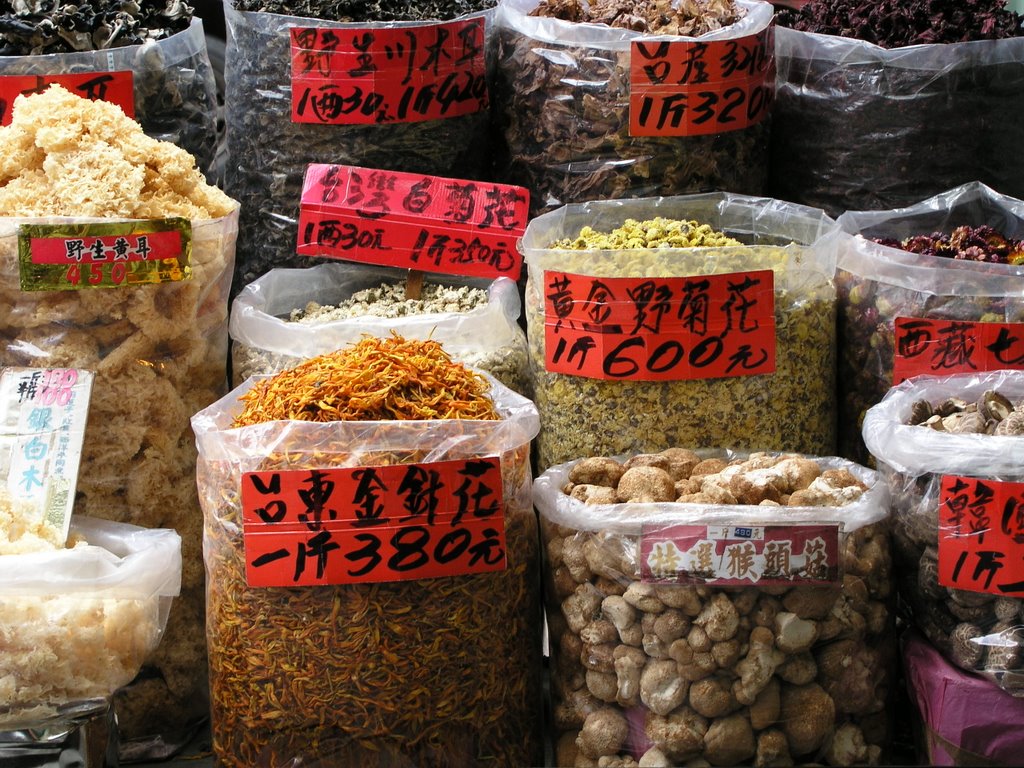 Shopping is plentiful, with numerous malls and underground shopping centers. One of the most interesting markets is actually outdoors. That is the Dihau market, which is a suitable replacement to the Lugang experience. You can buy pretty much anything you've never wanted to buy there. Big bags of dried flowers, herbs, roots, spices, and whatever else goes into the traditional Chinese medicine doctor's bag. I couldn't even recognize most of the stuff they were selling, which makes for quality cultural enrichment.
Probably the most interesting thing are the night markets. Considering the daytime heat, it's easy to see why night markets would be so popular. And the night markets in Taipei can approach a carnival like atmosphere. And the most carnivalistic, or carnivoristic one, as the case may be, is Snake Alley. There, you can find almost anything your heart desires. Of course there are snakes, which are charmed in front of restaurants as an attention getter. Handlers poke and prod the snakes to perform, and hopefully consume a rabbit or rat for the crowd. The snakes, for their part, seem to be content to rest. You can also find the expected rows of food carts and vendors hawking everything imaginable. As a bonus, they do in fact have carnival games available. Shooting games, throwing games, some mah jong based game that I couldn't figure out, fortune tellers, and a quite a few arcades that are filled with the everything from crane games, pop-a-shots, drumming games, to the latest Mortal Combat type games. 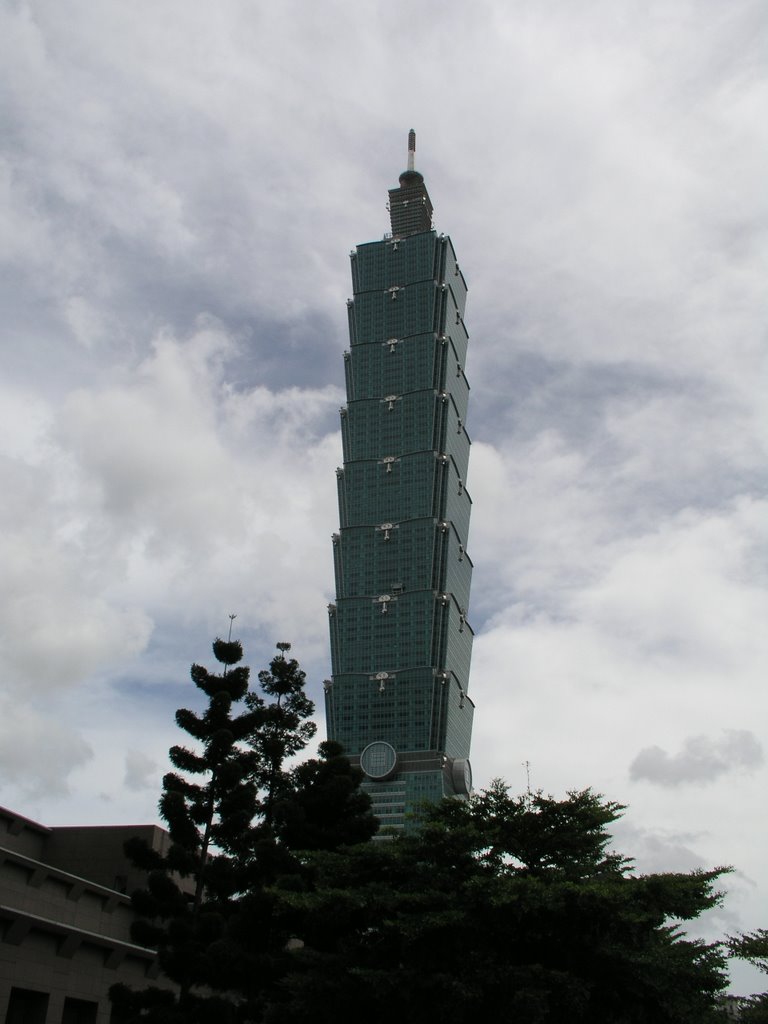 The last, and most modern of Taipei's experiences is Taipei 101. For now, at least, it is the world's tallest building. The draw is enhanced by the haute couture mall, an impressive food court, and a small, foreign goods filled grocery store that would be a welcomed addition to Korea. Going to the top costs NT350, which is about US$11. Which is the same amount as I was paying for my hostel room. Since I was trying to budget my expenses, I passed on the venture up. Instead, I had to content myself with making a small purchase to take home - tortilla shells and some pesto sauce packets. Besides, Taipei doesn't exactly have an impressive skyline to ogle. Taipei 101 is the only building that stands out from more than a few blocks away.
On Sunday, I caught the bus to the airport and made the 2 1/2 flight back to Incheon. And then spent 3 hours getting back to my apartment in Incheon. Let's just say I, and probably everyone in town, except the bus companies and taxi drivers, look forward to the extension of the subway out to the airport.
Overall, I found Taiwan a nice diversion from Korea. It, along with Korea and Japan, are considered the high pay teaching opportunities. So I'm keeping it as a possibility for sometime in the future. I'd prefer going to Japan, but I fear my expenses there would overwhelm me. At least for now, I'm happy with my situation in Korea. There are some aspects which are more enticing, and some that are less enticing. Chinese food a little more varied and palatable to me than Korean food (please, no more kimchi!), but I was sorely disappointed by their inability to make Kung Pao chicken (no pow to the Kung Pao). The language and characters are a definite downer, but I've discovered how quickly you can pick up the characters that you need. By the end of my trip, I was able to recognize the Chinese characters for Kung Pao chicken as well as fried rice.
This will probably, actually hopefully, be my last trip for a while. At least until winter break. In the meantime, I'll try to gather some interesting stories and pictures here in Korea.
Another view of Taipei 101. 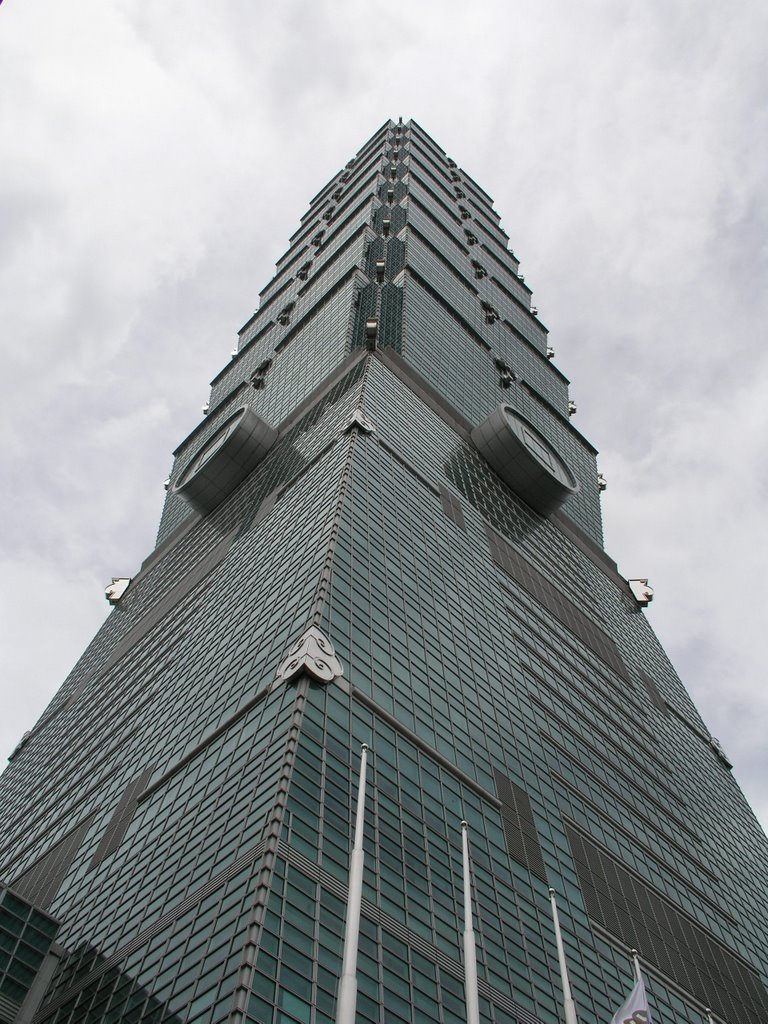
Tuesday, August 1, 2006
Lugang
I next hopped on the train from Tainan to Changhua, which is about half way between Tainan and Taipei. Trains leave almost every half hour and go up and down the coast at varying levels of urgency. The cost is quite reasonable - about US$10 for the two hour trip, while people under 115cm (just under 4 feet) get to ride for free. After getting off of the train in Changhua, I crossed the street and transferred to a rickety old bus that took me to the little town of Lugang. 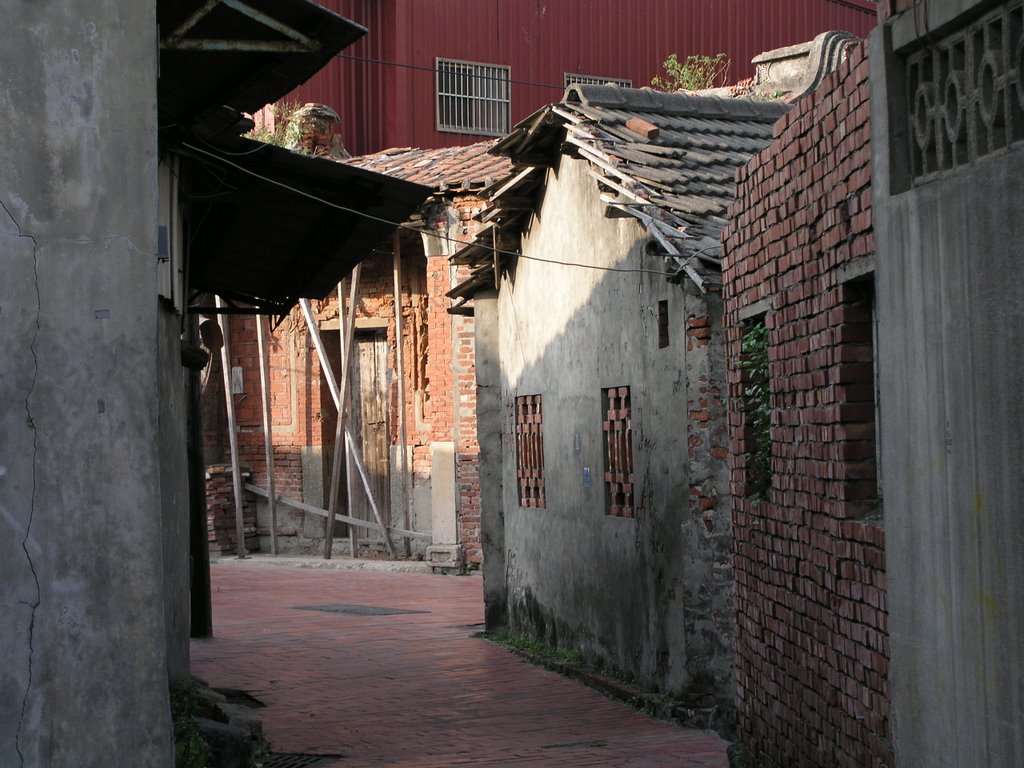 Lugang, or Lukang, depending on how you want to romanize it, has a history similar to that of Bruges, Belgium. Once an important port, the river silted up. Meanwhile, they prevented the railroad from passing through, leaving the town to age graceful into a rustic little historic anomaly. While Bruges has an overwhelming charm and character to it, Lugang is much less of an historic artifact. There are a few interesting old alleys, with quaint little houses and shops lining the walk. There are a couple of interesting temples. But after seeing the temples in Tainan, there's not much new left to see in the way of temple architecture. There are also numerous craft and art shops which line several old style streets. The wafting aroma of saw dust and lacquer and the handicrafts do provide some semblance of atmosphere, but crafts are not really my interest.
Even though the Taiwanese like to flock there, it's not really a must see destination for the foreign tourist. The narrow alleys of Taipei are just as interesting, albeit a little more congested and urban. Temples are everywhere in Taiwan. And if you're seriously into acquiring Chinese objets d'art, you'll go to mainland China, where the price would be a fraction of the cost that they are in Taiwan.
A small memorial in one of the old alleys
Ghost money - in addition to food, they also leave small plates of dried flower petals and ghost money. The ghost money is burned and used by the dear departed ancestors in the afterlife. 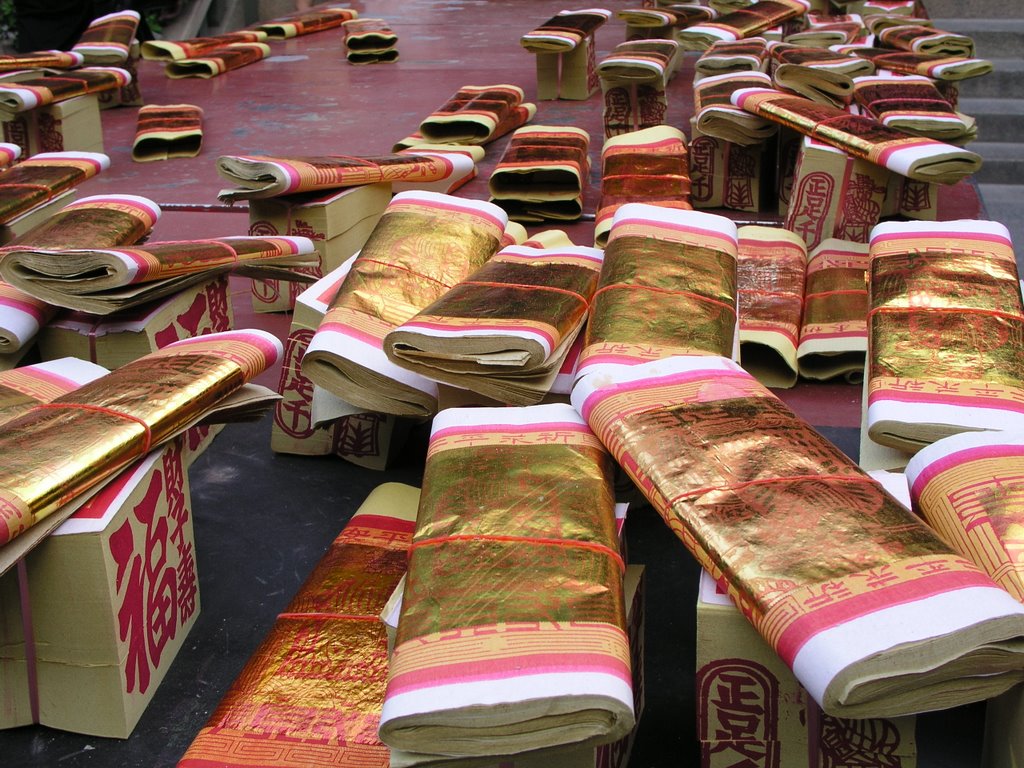
Sunday, July 30, 2006
Tainan
I arrived at Chiang Kai-shek airport Saturday afternoon. Rather then making the venture into Taipei, which is about an hour away, in the other direction, I headed straight down the coast. After a 5 hour bus journey, including a 10 minute connecting layover in Taichung, I arrived in Tainan. Tainan is the oldest city in the country and was the capital of Taiwan from the 17th - 19th centuries. The inter-city buses were quite easy to use, and very comfortable. The first bus, to Taichung, had seats which were super plush. There was one seat on each side of the aisle, with big cushy arm rests, TV screens, with a movie playing (I think it was the Journey to the Center of the Earth remake, or something along those lines), and speakers, playing the original English dialogue, in the head rest. The second bus, from Taichung to Tainan, was a little less cozy, but still quite nice. It has three seats per row, and arm rests that weren't quite as La-Z-Boyish. But still, it was far superior to anything Greyhound has to offer. 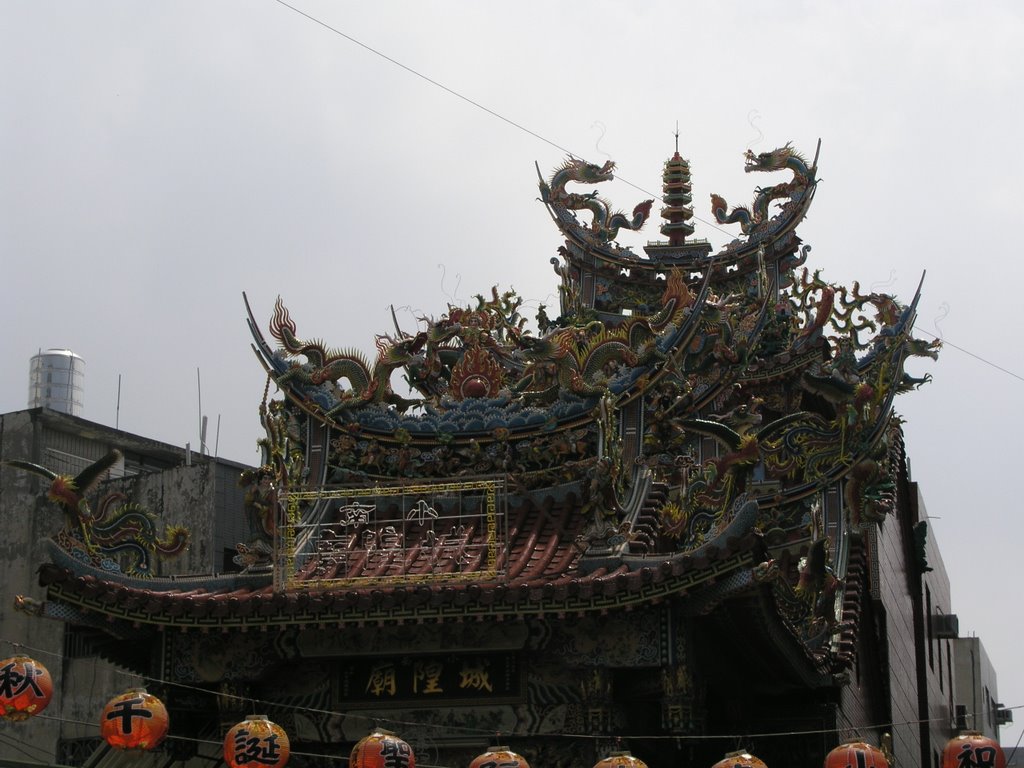 The main drawing points of Tainan are its old temples. Taiwan religion is a combination of Buddhism, Confucianism, Taoism, and folk religion. While the strictly Confucius temples are sedate, and resemble Korean or Japanese temples, the Taoist and folk influenced temples are extremely garish. Dragons and charactures line the roof tops. Inside, there is ornamentation galore, and a wide variety of gods represented. The most popular seems to be Matsu, the sea goddess. Other popular gods include the war god, the earth god, the god of heavens, and the city god.
 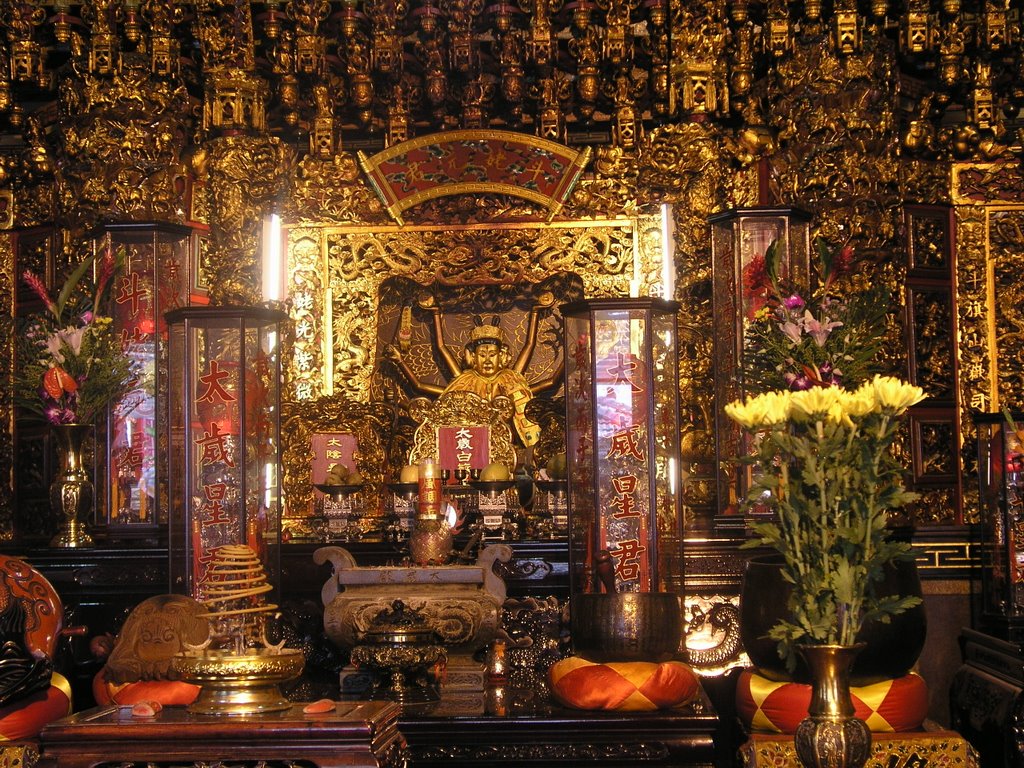 The layout of the temples differs from Japanese temples in other respects too. Japanese temples, and the few Korean temples that I've seen, usually have a multi-building layout, which is spread out over a small compound. There is an entry gate, a main hall, a lecture hall, a pagoda, a small pavilion for the bell, and an administration building. The Taiwanese temples, on the other hand, usually consist of one building, or a series of buildings all under one roof. There are successive altars along the central axis, with side chapels located in the passages between them. While some of the temples have open air courtyards, they are by and large an
There are a couple of other attractions in Tainan, such as a couple of old Dutch forts. They are interesting, but not overly impressive. With less oppressive heat, and a couple of cab rides, everything could be covered in one long day. My only recommendation is that if you go to the Eternal Golden Castle, stop by the little drink stand across the street. One of the daughters working there is studying at the local university. She can speak English (and Japanese and of course Chinese) and will provide you with a seat in the shade while you wait for the bus, which only comes once an hour.
Something else that stood out were the sidewalks. Most of the sidewalks in Taiwan (or at least in the cities I visited) are covered by the buildings that line the street. Given the intense sun beating down, this is a good thing. Not so good is all the stores that push there display racks and restaurant seating out onto said sidewalk. So while you don't have to dodge scooters driving on the sidewalk, like in Korea, you do have shoppers and dinners to dodge. And with parked scooters usually aligned between the sidewalk and road, it's almost like an obstacle course making your way through town.
One further note - be forewarned of the automatic doors. They usually don't open until you are face to face with the sensor. So make sure you pause before you walk into the door.
Some of the dragons that populate most of the Taiwanese temples
A closer look at some of the temple roof details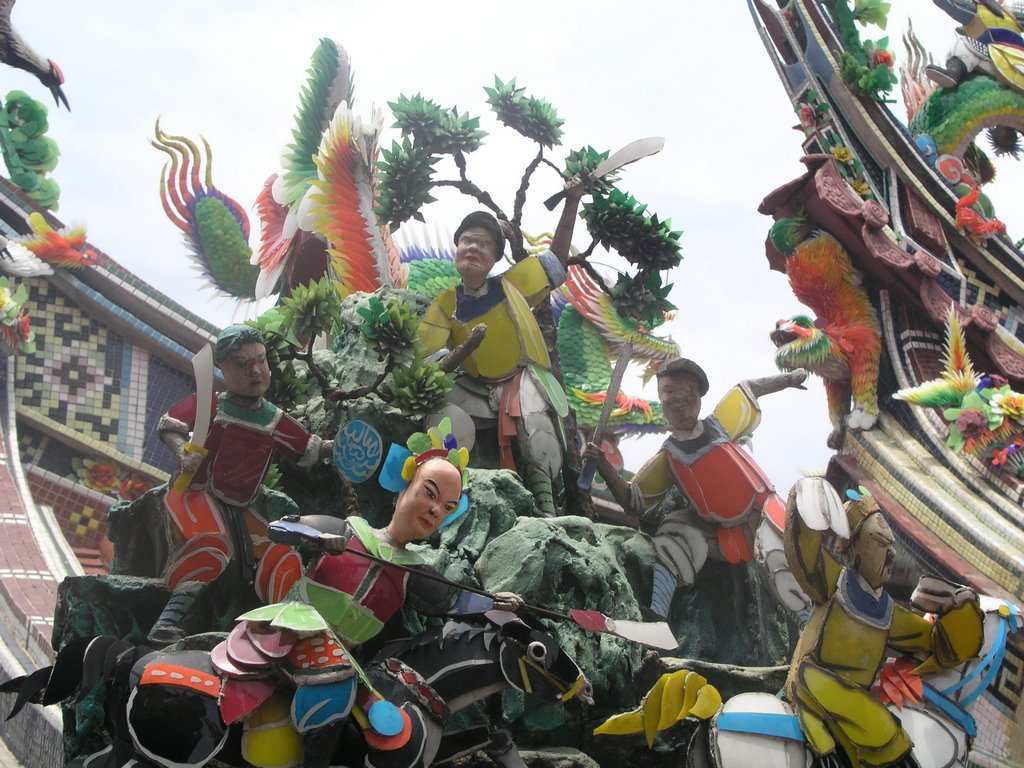
The inside ornamentation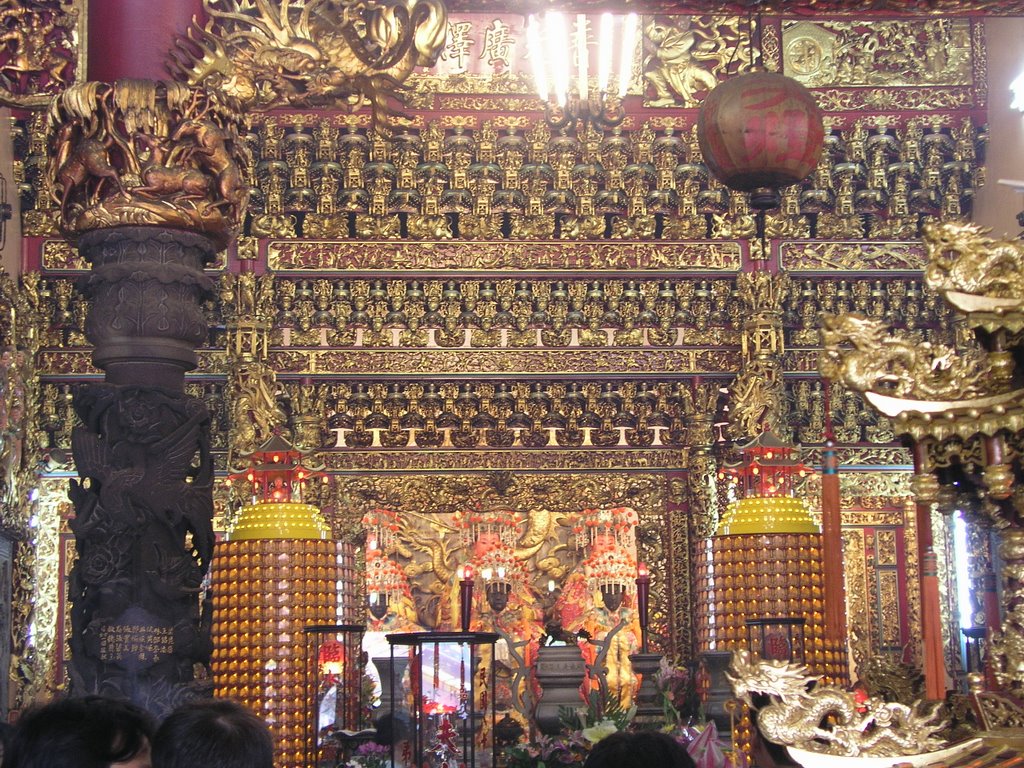
This is where gifts of food are left. 
Subscribe to:
Posts (Atom)